



After a long New Hampshire winter, lawns across Portsmouth and the Seacoast often need a little extra attention.
Between heavy snow loads, salt spray from coastal storms, and those relentless March winds, your turf has likely spent the last few months struggling for air.
If your lawn looks flattened, gray, or littered with fallen branches, you’re not alone. It’s a common sight across the Seacoast this time of year. Leaving that debris in place too long, however, can lead to mold, slow spring growth, and patchy turf once the ground finally thaws.
The good news is that a solid weekend of cleanup is usually enough to get things moving in the right direction.
Whether you’re planning to tackle it yourself or simply want to understand what your yard needs, this spring lawn cleanup checklist for Portsmouth NH homeowners will help you prepare your property for the mowing season ahead.
Why Spring Lawn Cleanup Matters in Portsmouth NH
Spring lawn cleanup isn’t just about improving curb appeal after winter. It also helps your lawn recover faster and grow stronger throughout the season.
Across Portsmouth and the Seacoast area, winter conditions often leave lawns dealing with:
-
Compacted soil from snow and ice
-
Snow mold and excess moisture
-
Layers of leaves and debris
-
Plow damage along driveways
-
Dead or flattened grass
One area homeowners often overlook is the corners of fences and the areas under shrubs where winter winds deposit leaves. Removing this debris allows sunlight and airflow to reach the grass underneath. If left in place too long, these damp piles can smother new growth.
Pro Tip:
Seacoast New Hampshire lawns tend to stay wetter longer in early spring because of coastal moisture and heavier soils. Avoid heavy equipment or mowing too early, or you can create ruts that require fixing or may last the entire season.
Taking the time for a proper spring yard cleanup in Portsmouth helps prevent problems later and keeps your lawn healthier through the summer.
Step 1: Remove Winter Debris
The first step in any spring lawn cleanup is clearing away everything winter left behind.
This usually includes:
-
Fallen branches
-
Pine cones and acorns
-
Leftover leaves
-
Sand or gravel from winter roads
-
Trash blown in during winter storms
Clearing debris allows sunlight and air to reach the grass again.
New Hampshire winter storms are notorious for bringing down small pine limbs and branches. Besides being unsightly, these sticks can quickly damage mower blades once the mowing season begins.
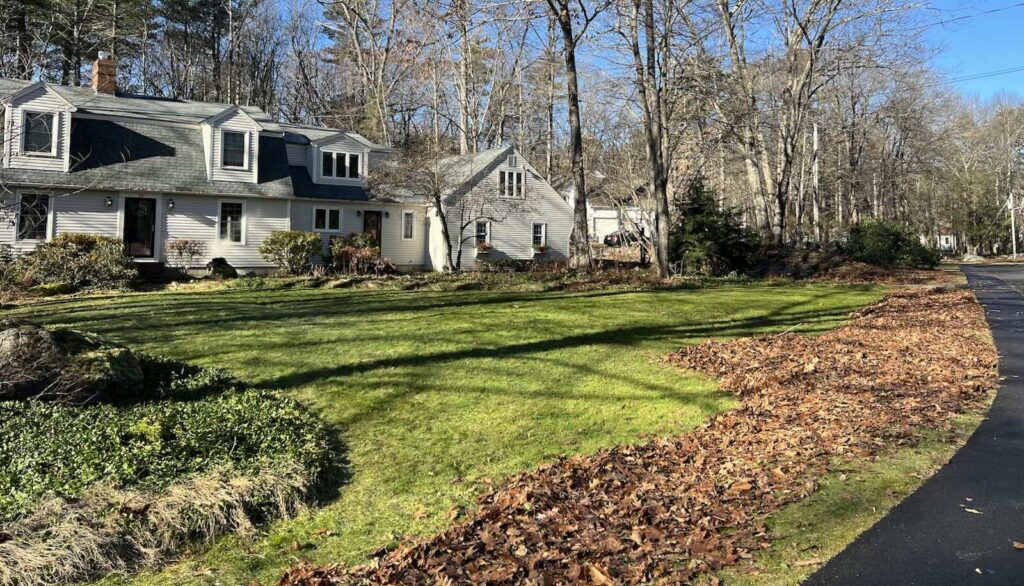
Spring lawn cleanup in Stratham NH preparing the yard for the mowing season.
Step 2: Loosen Matted Grass
Once debris is removed, a light raking helps loosen matted grass and break up areas where snow sat for long periods.
This helps:
-
Improve airflow
-
Allow new grass to grow through
The goal here isn’t aggressive dethatching. Think of it more like fluffing the lawn back up after winter.
Focus especially on areas where snow piles up, such as along driveways or near plowed sections of the yard.
Step 3: Check for Bare or Damaged Spots
It’s very common to find thin or bare areas in early spring across Portsmouth lawns.
These spots often develop from:
-
Snow mold
-
Salt damage near roads or walkways
-
Heavy snow piles
-
Rodent activity beneath the snow
Lawns near the coast in Portsmouth, Rye, New Castle, and Kittery often deal with salt damage from road treatments or sea spray. If patches of grass near the driveway look burned or crispy, they may need a deep watering to help flush salt out of the soil.
This is also a good time to identify bare patches that may need overseeding once soil temperatures reach about 50°F.
Smaller areas often fill in naturally as temperatures warm and the lawn begins growing again.
Step 4: Clean Up Garden Beds
Spring is also a great time to tidy up garden beds around the property.
Many Portsmouth homeowners find their beds filled with leaves, pine needles, and leftover plant material after winter. Clearing this out improves the appearance of the landscape and prepares beds for new growth.
Typical garden bed cleanup includes:
-
Removing leaves and debris
-
Trimming and pruning shrubs
-
Cutting back dead perennials
-
Redefining the edge between lawn and beds
-
Pulling mulch away from tree trunks
Early spring is often the best time to trim or shape many shrubs as plants begin coming out of dormancy.
If mulch has been piled too high against tree trunks — sometimes called a “mulch volcano” — it’s a good idea to pull it back to prevent bark damage and rot.
Clean bed edges also help mulch stay in place and give the yard a more maintained appearance heading into the season.
Step 5: Prepare for Spring Lawn Maintenance
Once cleanup is complete, your lawn is ready for regular spring lawn care.
This often includes:
-
First seasonal mowing
-
Overseeding where needed
-
Dethatching if necessary
-
Core aeration for compacted soil
-
Light fertilization or soil amendments
-
Monitoring for early weeds
If your soil feels hard as a rock, compaction may be the issue. Core aeration removes small plugs of soil, allowing water, oxygen, and nutrients to reach the root system.
Across the Seacoast, most lawns begin active growth in late April or early May, depending on temperatures. Towns located more inland like Eliot, Stratham, Dover and Durham may be ready a week or so sooner then coastal towns like Rye, New Castle, Portsmouth and Kittery.
Waiting until the lawn is dry before mowing will help prevent ruts and protect soil structure.
Spring Lawn Cleanup Checklist
Here’s a simple yard cleanup checklist homeowners can follow each spring:
✔ Remove leaves and winter debris
✔ Pick up sticks and fallen branches
✔ Lightly rake or blow matted grass
✔ Clean out garden beds
✔ Inspect the lawn for winter damage
✔ Repair plow damage along edges
✔ Edge garden beds and walkways
✔ Prepare the lawn for the first mowing of the season
This checklist covers the most important steps for a successful lawn cleanup Seacoast NH properties often need after winter.
DIY vs Professional Spring Cleanup
| Task | DIY Effort | Professional Advantage |
|---|---|---|
| Debris Removal | Heavy lifting and hauling | High-volume vacuums and efficient cleanup |
| Bed Edging | Time-consuming | Precision edging tools |
| Equipment | Standard homeowner tools | Commercial-grade equipment |
| Disposal | Requires bags or truck | Debris removal included |
Spring cleanup can take several hours to a few days depending on the size of the yard and the amount of winter debris. You can view some of our recent landscaping and cleanup projects here.
Frequently Asked Questions
When should I start spring lawn cleanup in Portsmouth NH?
Most spring yard cleanups in Portsmouth begin once the snow has melted and the ground is dry enough to walk on without sinking. This usually falls between mid-March and mid-April, depending on the year.
When does mowing season start in the Seacoast NH area?
For most homeowners around Portsmouth, weekly mowing typically begins in early May, depending on weather and grass growth.
Do I need to overseed every spring?
Not always. Many lawns fill in naturally once temperatures warm. Overseeding is usually recommended if you notice larger bare patches or thinning turf.
Getting Your Lawn Ready for the Season
A proper spring lawn cleanup helps your yard recover from winter and sets the stage for healthy growth throughout the season.
Removing debris, lightly raking the lawn, checking for damaged areas, and cleaning up garden beds can make a big difference in how quickly your grass greens up.
For homeowners across Portsmouth and the Seacoast NH area, spring cleanup is often the first step toward a healthy, well-maintained lawn for the rest of the year.
If you’re looking for help with spring lawn care in Portsmouth NH, Seacoast EcoMow provides eco-friendly lawn care using quiet electric equipment that produces far less noise and emissions than traditional gas landscaping equipment.
If you’d rather skip the work, Seacoast EcoMow provides professional spring lawn cleanups and seasonal lawn care services across Portsmouth NH and the Seacoast. You can learn more about our lawn care and property maintenance services here. If you decide you would like some help you can request a free quote here.